Table of Contents
A market on the verge of doubling
Africa’s gambling market is projected to reach $11.3 billion by 2032 — almost double the $6.1 billion it generated in 2023. The drivers are well established: rapid urbanisation, growing internet coverage, aggressive operator marketing, and a continent whose population is overwhelmingly young. Some 70% of people in sub-Saharan Africa are under 30, and it is this demographic that is fuelling the betting boom more than any other factor.
Internet access, while still the world’s lowest on average, has grown from 25% in 2019 to 36% in 2025 and continues to expand — particularly in more developed economies like South Africa and Kenya. Mobile payment integration has removed much of the friction that once made online gambling inaccessible to large portions of the population.
Who is winning right now
South Africa remains the continent’s most regulated and valuable gambling market, with interactive gross win of $3.3 billion in 2025. The country’s top three operators — Hollywoodbets, Betway and Lottostar — have built commanding positions through years of localisation and brand investment.
Betway, operated by Super Group, is perhaps the continent’s most expansive operator, active in South Africa, Ghana, Zambia, Tanzania, Malawi, Mozambique, Nigeria and, most recently, Botswana. Super Group reported 22% revenue growth in its 2025 financial year to $2.2 billion, with African revenues accelerating 27% year-on-year. Sun International’s online arm, Sun Bet, is also making significant moves — its H2 2025 income grew nearly 80% year-on-year, prompting group CEO Ulrik Bengtsson to signal a more aggressive push for market share in 2026.
The major markets beyond South Africa
Nigeria — Africa’s most populous nation — recorded $1.1 billion in interactive gross win in 2025, making it the continent’s second-largest market. Ghana followed at $883.3 million and Kenya at $677.5 million, with both markets attracting significant international attention. European giant Kaizen Gaming entered Ghana with its Betano brand in February 2026, with director of business development George Skarlatos confirming plans for further continental expansion. Leading offshore operator BC.Game also made its Nigeria entry this week.
The DRC: high potential, low regulation
One market that industry insiders are watching closely is the Democratic Republic of the Congo. Katerina Rybachuk of London-based law consultancy Legal Pilot describes it as one of the most lucrative and high-potential markets on the continent — characterised by growing demand, informal regulation and limited state oversight.
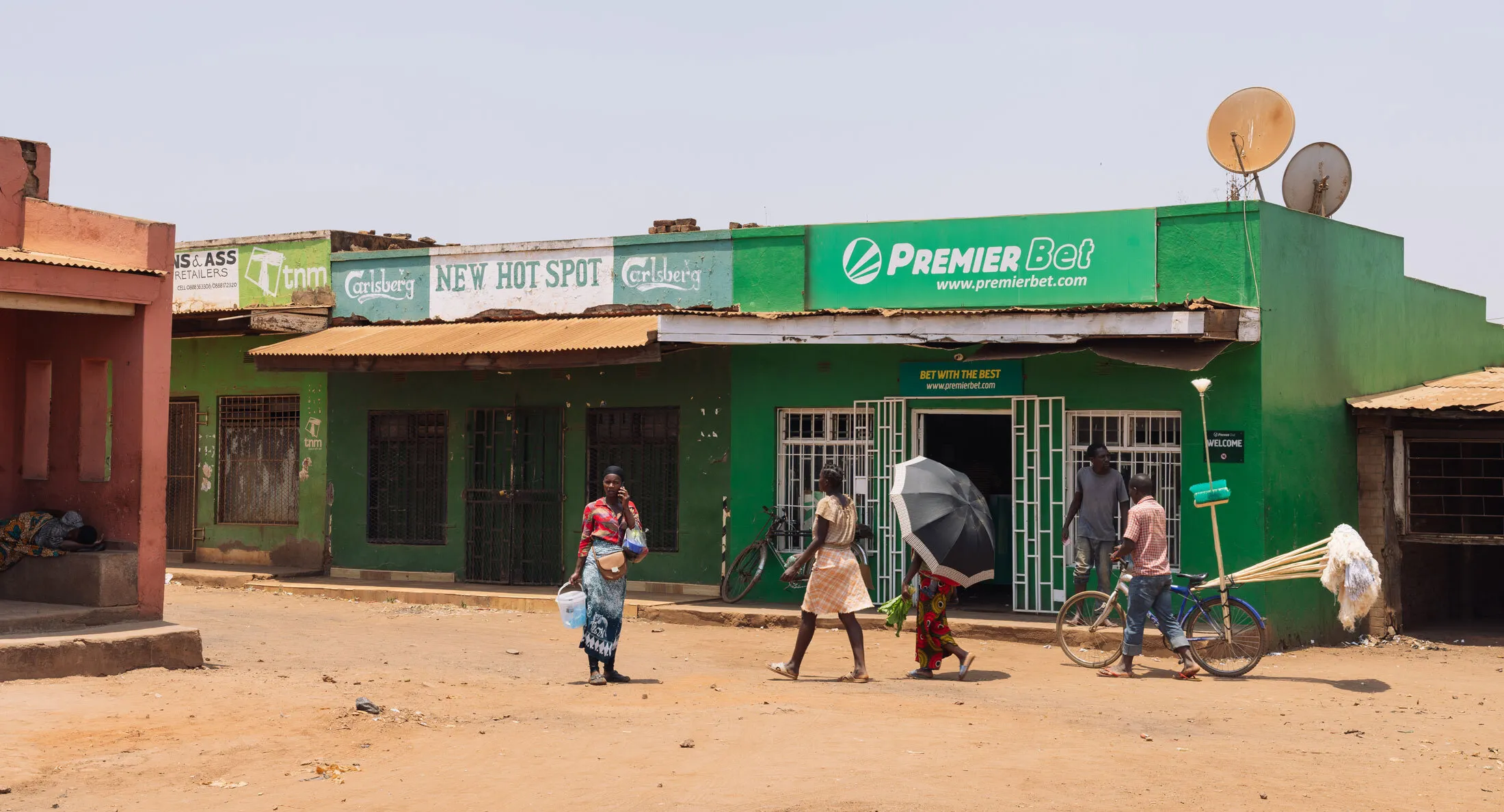
Rather than immediately enforcing strict licensing, Congolese authorities have taken a fiscal-first approach — prioritising registration and tax collection over enforcement. Brands including Premier Bet, Betika and 1xBet are cited as having some level of presence, though the absence of a formal licensing regime makes the landscape difficult to map definitively.
The illegal market problem
Not everything points upward. South Africa’s illegal gambling market is a serious concern. According to the South African Bookmakers Association (SABA), approximately 62% of all online gambling activity in the country takes place on illegal platforms, siphoning more than $3 billion in GGR annually. At least 50 unregistered online casinos were operating in the market by the end of March 2026, with as many as 16 million players involved over the past year.
SABA CEO Sean Coleman is clear about what operators need to stay committed to the market. “What operators want is policy certainty and stability. Operators make considerable investment and will not stay in volatile markets where regulators or governments increase taxes at short notice.”
Regulation is the key to unlocking the next phase
The outlook for Africa’s gambling sector ultimately hinges on regulatory development. Peter Kesitilwe, CEO of the Africa iGaming Alliance, believes that strong, globally aligned regulatory frameworks across core markets — South Africa, Kenya, Ghana, Botswana and Nigeria — will set the trajectory for the next phase of growth. He has suggested 2026 could see Africa’s first multi-country regulatory compact, aligning standards on responsible gambling, payments oversight and data sharing across borders.
For the international operators flooding into the continent, the message is consistent: where regulation is clear and stable, investment will follow — and Africa’s gambling boom has only just begun.