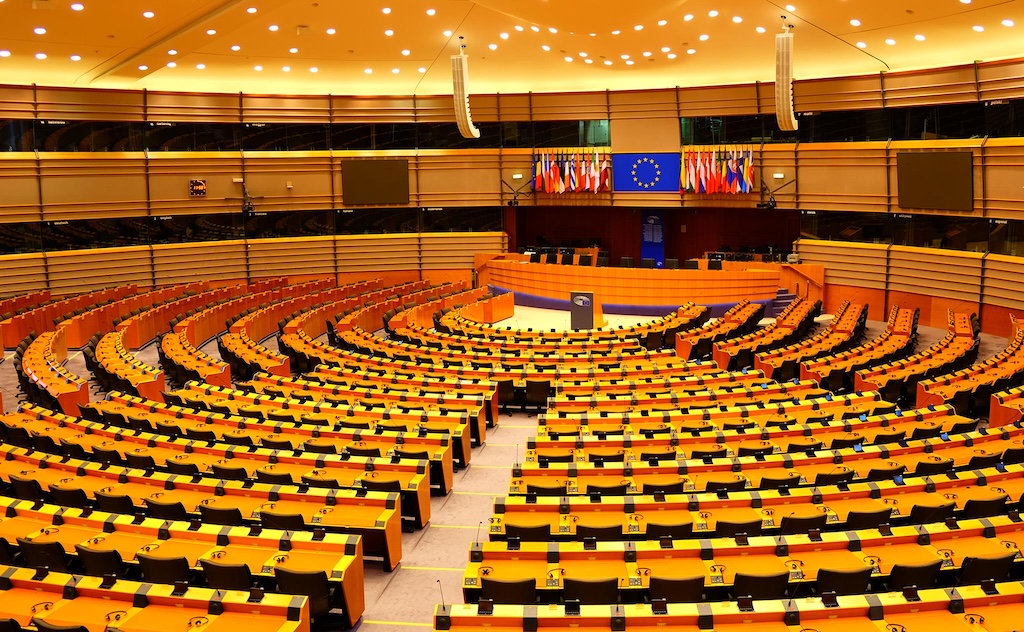
A proposal that was once dismissed as politically unrealistic has reached the floor of the European Parliament. On May 27, the Parliament’s Budget Committee will hold formal discussions on whether gambling operators across the EU’s 27 member states should contribute to the bloc’s budget through a continent-wide tax. The session, overseen by Piotr Serafin, is not expected to produce legislation immediately — but it marks the first meaningful procedural step for an idea that, until recently, existed primarily as a political talking point.
The proposal was pushed earlier this year by Romanian MEP Victor Negrescu. It arrives at a moment when Brussels is under acute pressure to identify new revenue streams ahead of negotiations for the EU’s next long-term budget cycle, covering 2028 to 2034. That framework is expected to approach €2 trillion — an amount already generating difficult conversations about where additional money can realistically come from.
Table of Contents
The mechanics of the tax
The concept is straightforward on paper: a 1% charge tied to either gambling revenues or turnover generated across the EU. Internal estimates circulating among supporters suggest the tax could generate between €2 billion and €4 billion annually — potentially reaching as much as €28 billion over a seven-year budget cycle.
The choice between a revenue-based and a turnover-based model is, however, far from trivial. A turnover-based approach would tax total wagers rather than retained revenue after winnings are paid out — a distinction that would likely generate fierce resistance from operators, for whom the difference between the two models is substantial.
A debate shaped by the illegal market
The political framing of the tax has been carefully calibrated. Rather than presenting it as a punitive measure against gambling companies, supporters have tied it to funding gaps in health, education and youth programmes — while also linking it to concerns about illegal betting markets.
That second framing has created an unusual dynamic. Both proponents and industry opponents are using the black market to support entirely opposite conclusions.
MEP Negrescu has argued that illegal online gambling already dominates large parts of Europe’s digital betting landscape, with unlicensed activity estimated at roughly 71% of the market. In his view, the absence of coordinated European measures is already costing governments revenue while exposing consumers to organised crime and money laundering risks.
The industry sees the same underground market as a warning against new taxes. The European Gaming and Betting Association has spent months opposing the proposal, with Secretary General Maarten Haijer describing it as impractical — arguing that additional fiscal pressure on licensed operators would eventually push players toward unregulated sites offering better odds and fewer restrictions. The European Casino Association has reinforced that position, citing YieldSec research estimating that illegal gambling already costs European governments around €20 billion annually in lost tax revenue.
What this means for players and trusted online casinos
The debate around the proposed EU gambling tax has direct implications for players across Europe. If additional tax burdens push licensed operators to reduce their competitiveness — through lower odds, reduced bonuses or higher minimum deposits — players may find themselves increasingly tempted by unregulated alternatives. This is precisely the scenario that trusted online casinos and their industry representatives are warning about. Trusted online casinos invest heavily in regulatory compliance, responsible gambling tools and consumer protections — costs that become harder to sustain when fiscal pressure from above increases. A tax environment that undermines the commercial viability of licensed operators ultimately weakens the very framework that protects players in the first place.
The jurisdictional problem
Beyond the revenue debate lies a deeper structural challenge. Gambling regulation has historically been a matter for individual member states, with tax systems varying dramatically across the bloc. Any attempt to centralise even a small portion of gambling-related revenue at EU level risks reopening longstanding tensions between Brussels and national governments over fiscal sovereignty — a battle Brussels has historically found difficult to win.
Why this proposal has more traction than it once would have
Despite those obstacles, the broader political climate may be giving the gambling tax more momentum than similar proposals would have attracted a few years ago. The EU faces mounting pressure to finance defence spending, industrial policy, green transition programmes and debt obligations accumulated during previous crises. Revenue streams once considered politically untouchable are increasingly entering mainstream discussion in Brussels policy circles — and gambling, with its cross-border digital model and growing revenues, presents itself as a natural candidate.
The committee meeting on May 27 is exploratory rather than decisive. Resistance from industry groups and member states is expected to intensify if the proposal advances further into the legislative process. But the fact that the discussion has reached this stage at all is a signal in itself — about the scale of the EU’s budget challenge, and about how aggressively Brussels is now searching for revenue wherever political space exists.